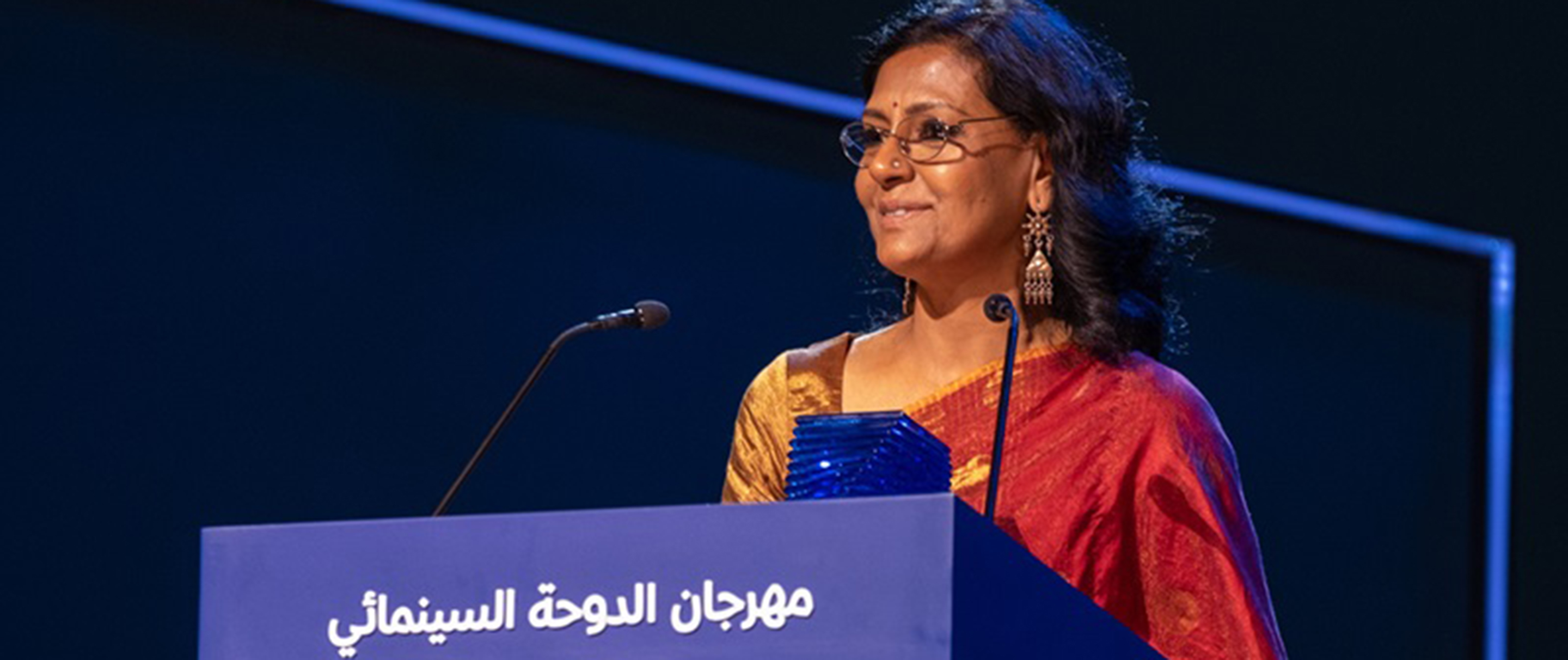
- Indian actor and filmmaker honoured with Syrian actor Taim 2026 Award which highlights artistic contributions to cinema
- Das says the award is meaningful validation of her choices tomake independent cinema with a conscience
Doha, Qatar; 21 November 2026: Indian actor and filmmaker Nandita Das said cinema carries a greater responsibility in a world full of strife, violence and prejudice, a day after she received the Doha Film Festival (DFF) 2026 Creative Excellence Award. Das and Syrian actor Taim Hasan received the award at the opening ceremony for their outstanding contributions to cinema.
Speaking to the media in Doha on her first visit to the city, Das said the award recognised choices that have often gone against the grain. "My choices have been different. My well-wishers ask why I am not doing more mainstream cinema. An award like this feels like encouragement, a hug. I am very grateful for the recognition of the choices I have made," said Das.
"The films I have made are cinema with a conscience. They do not divide people or widen the fractures in the world. That kind of cinema is becoming rarer as everything becomes more commercialised. This award recognises everyone who takes on that responsibility. Art is not a luxury. It is primal. We all seek it, create it and need it, and it is our responsibility to reflect the realities of the world."
She said festivals are a strong platform for independent films, but many films reach a festival and go no further. “We need a whole infrastructure of distributors, producers, cinema owners, patrons and minds that help independent cinema."
Das has acted in more than 40 films and directed three, many thatdeal with prejudice and discrimination. "When you see discrimination, an instinct kicks in. We are all prejudiced, and I am aware of my own, which I try to fight. For me, telling stories that challenge prejudice has become both an instinctive and a conscious decision," said Das.
Das said India makes about a thousand films a year, and that producers and audiences each blame the other for what reaches the screen. Even streaming platforms, which once opened space for independent films, now face pressure to go mainstream. "Time is the true test of art. Guru Dutt's Kaagaz Ke Phool did not do well when it was released, and today it is seen as one of the greatest films from India. If you have deep conviction in what you believe, you will find the courage and the ways to tell those stories, however small that space may be," said Das.
Asked about technology and AI, including the use of actors' voices, Das said the film industry faces a challenge it has not fully prepared for. "Lived experience cannot be duplicated. Independent cinema, which is more nuanced and unique, will have its time. Craft and art will have greater value than machine-made things, because what is easily available loses its value. We should not be too scared of AI, nor embrace it blindly. We should focus on what is meaningful, creative and original."