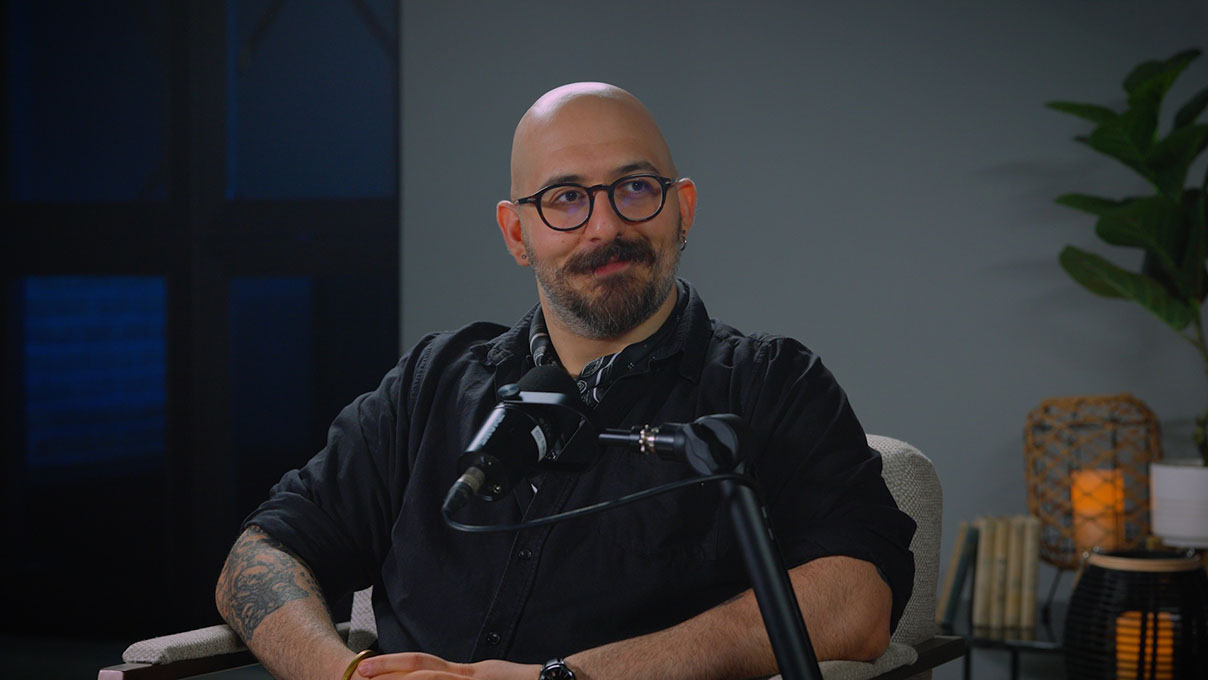
In this insightful episode of The Ajyal Show, researcher and educator Chafic Najem asks us to slow down in front of the images we scroll past every day. His interest started young. Growing up in postwar Beirut, he pieced together the past from stories, photographs and memories that rarely lined up, and that puzzle never quite left him. If the versions could not all be true, then how much of what we know arrives already shaped by someone else's hands?
For Chafic, there is no clear divide between making images and studying them. Practice sharpens theory, and theory gives us more tools to understand the choices behind a frame. He is especially interested in what an image carries beyond its subject. In footage filmed inside prisons, a shaky frame or an unclear sound is not simply a technical flaw. It can often reveal the conditions under which that image was made and offer a perspective on a space more often pictured from the outside.
He describes a visual culture where images often reach us before their context does. He encourages viewers to consider where an image came from, what surrounds it, and what narration has been laid over it, since each of these can reshape its meaning. Making the reuse of an image a responsibility as much as a choice.
Chafic puts the same question to filmmakers. Not just what story you want to tell, but why you are the one telling it. And when the material is difficult, how do you stay faithful to the people inside the frame? Being critical, he says, is not the same as being cynical. It is just a way of paying attention.
To learn more about Doha Film Institute's initiatives, workshops and funding that help support Qatar’s creative community, visit our website here.