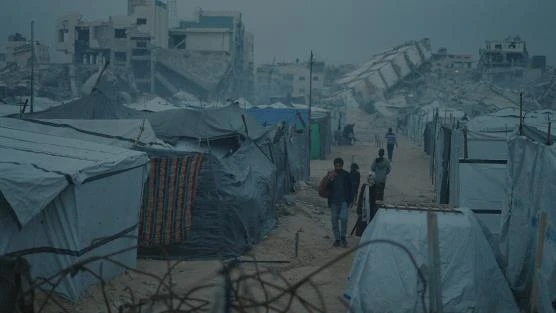
Gaza, 2025. After a bombing kills her mother and destroys their home, thirteen-year-old Raghad moves with her father into an overcrowded displacement camp. There, with no privacy and no one to guide her, she gets her first period. Her father, desperate to provide, takes work from a trader who profits from humanitarian aid, until the man’s attention turns to Raghad. Shot entirely in Gaza, Hosam Abu Dan’s fiction debut is intimate, restrained and unflinching.
Gaza, 2025. A bombing destroys Raghad’s home and kills her mother, and the thirteen-year-old and her father, Abu Raghad, end up in an overcrowded displacement camp, where tents stand close together, bathrooms are shared and water is scarce. There, Raghad gets her first period. With no mother to guide her, and too ashamed to add to her father’s burdens, she tries to hide it. Nour, a former neighbour, helps her quietly with advice and scarce supplies, though even that small kindness causes friction with Nour’s family, who fear giving away what they may need themselves.
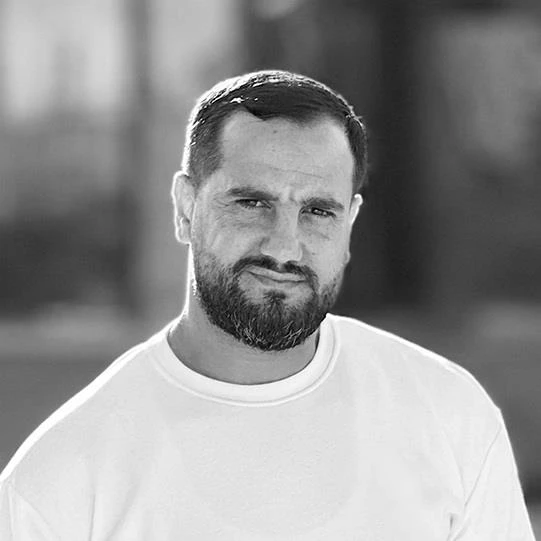
Abu Raghad has lost his home, his work and his standing. When Khalil, an old acquaintance who now controls warehouses and aid supplies, offers him a job, he takes it, telling himself he is doing what any father would. But Khalil’s help comes at a price, and his attention begins to turn towards Raghad. Filmed entirely in Gaza with a local cast and crew, under bombardment and displacement, Hosam Abu Dan’s first fiction feature keeps destruction looming at the edge of the frame. It looks instead at what war does to a body, a family and a community’s sense of right and wrong, and at a girl forced to grow up far too fast.
Abu Raghad has lost his home, his work and his standing. When Khalil, an old acquaintance who now controls warehouses and aid supplies, offers him a job, he takes it, telling himself he is doing what any father would. But Khalil’s help comes at a price, and his attention begins to turn towards Raghad. Filmed entirely in Gaza with a local cast and crew, under bombardment and displacement, Hosam Abu Dan’s first fiction feature keeps destruction looming at the edge of the frame. It looks instead at what war does to a body, a family and a community’s sense of right and wrong, and at a girl forced to grow up far too fast.