An animated history of Beirut, from its emergence as a modern city in 1860 to its invasion in 1982. Forged by emancipation and revolution, the city is ultimately fractured and consumed by civil war.
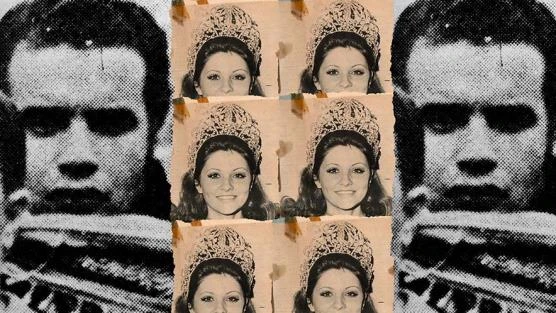
In 1971, at the age of eighteen, Georgina Rizk won the Miss Universe beauty pageant in Miami, instantly crowned the most beautiful woman in the world. One year later, in 1972, in the aftermath of the Munich massacre, Ali Hassan Salameh — then thirty — was labelled by international media as one of the world’s most dangerous men. In 1975, amid the madness of the Lebanese Civil War, often described as one of the most convoluted conflicts of modern history, these two worlds of superlatives collided and fell in love.
Their unlikely relationship forms the narrative thread of ‘A Lover’s Manifesto’, which follows the evolution of Beirut as a space of emancipation, contradiction, and revolution. To understand the historical conditions that placed Beirut at the centre of global conflicts, the film’s narrator travels back to the 1860s, retracing the international shifts and power dynamics that shaped the contemporary world. Through this expanded temporal lens, this animated documentary series unfolds as a chain of interconnected events, revealing Beirut as the site of a singular and fragile experiment in Arab modernity.
Their unlikely relationship forms the narrative thread of ‘A Lover’s Manifesto’, which follows the evolution of Beirut as a space of emancipation, contradiction, and revolution. To understand the historical conditions that placed Beirut at the centre of global conflicts, the film’s narrator travels back to the 1860s, retracing the international shifts and power dynamics that shaped the contemporary world. Through this expanded temporal lens, this animated documentary series unfolds as a chain of interconnected events, revealing Beirut as the site of a singular and fragile experiment in Arab modernity.