International Feature Film Competition
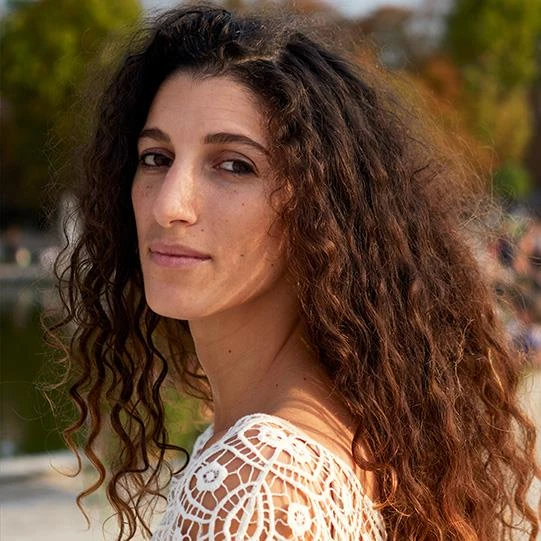
A daughter retraces the disappearance of a father she scarcely remembers, a Libyan diplomat-turned-peaceful-opposition leader, through family testimony, colleagues and archives. What begins as an investigation becomes a search for language, lineage and a self shaped by exile. As her mother’s long campaign for truth unfolds, memory shifts from myth to person, restoring detail to a life reduced by rumour and absence.
A daughter retraces the disappearance of a father she scarcely remembers, a Libyan diplomat-turned-peaceful-opposition leader, through family testimony, colleagues and archives. What begins as an investigation becomes a search for language, lineage and a self shaped by exile. As her mother’s long campaign for truth unfolds, memory shifts from myth to person, restoring detail to a life reduced by rumour and absence.
▶ Watch Trailer
A daughter sets out to piece together the life of the father who vanished when she was a child: a Libyan human rights lawyer, former foreign minister and UN ambassador who rejected an increasingly brutal regime and became a peaceful voice of opposition. His disappearance in Cairo reverberated for decades. While her mother, a Syrian artist, fought publicly for justice, she grew up in exile, trying to bridge a silence that shaped her identity. The film draws its strength from listening. Family members, friends and former colleagues speak candidly; archives are approached not as proof alone but as prompts for memory.
Across these encounters, an official biography gives way to a more intimate portrait, allowing contradictions and complexities to remain. The journey is as much inward as historical, an attempt to move beyond a one-dimensional hero and meet the father as a person: principled, present, and suddenly gone. The fascinating work considers how private loss intersects with national history and how an absence can define a family, a community, even a country. In the space between testimony and image, the daughter confronts the fear that forgetting might erase both a parent and a heritage. The act of filmmaking becomes an ethical commitment: to hold on, to name, to carry forward a story that insists on truth.
A daughter sets out to piece together the life of the father who vanished when she was a child: a Libyan human rights lawyer, former foreign minister and UN ambassador who rejected an increasingly brutal regime and became a peaceful voice of opposition. His disappearance in Cairo reverberated for decades. While her mother, a Syrian artist, fought publicly for justice, she grew up in exile, trying to bridge a silence that shaped her identity. The film draws its strength from listening. Family members, friends and former colleagues speak candidly; archives are approached not as proof alone but as prompts for memory.
Across these encounters, an official biography gives way to a more intimate portrait, allowing contradictions and complexities to remain. The journey is as much inward as historical, an attempt to move beyond a one-dimensional hero and meet the father as a person: principled, present, and suddenly gone. The fascinating work considers how private loss intersects with national history and how an absence can define a family, a community, even a country. In the space between testimony and image, the daughter confronts the fear that forgetting might erase both a parent and a heritage. The act of filmmaking becomes an ethical commitment: to hold on, to name, to carry forward a story that insists on truth.