Ajyal Feature Film Competition
Forty years after her arranged marriage as a child, Hawa finally begins an independent life and becomes literate. However, with the return of the Taliban to power, her dreams, along with those of her daughter and granddaughter, are shattered as they face new struggles. From Kabul to forced migration, the story becomes a patient record of courage and care, and how education and effort persist despite fear, and how a family keeps faith with its own future.
Forty years after her arranged marriage as a child, Hawa finally begins an independent life and becomes literate. However, with the return of the Taliban to power, her dreams, along with those of her daughter and granddaughter, are shattered as they face new struggles. From Kabul to forced migration, the story becomes a patient record of courage and care, and how education and effort persist despite fear, and how a family keeps faith with its own future.
▶ Watch Trailer
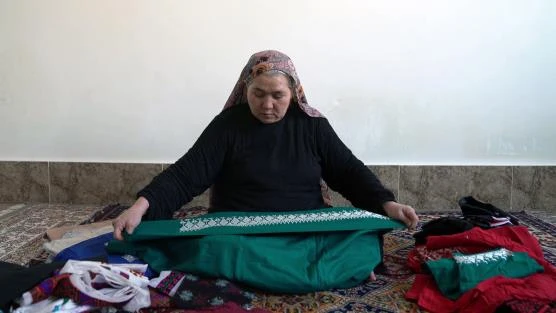
Beginning as a quiet portrait of renewal, the film follows a Hazara woman who, forty years after a child marriage, starts to read and write at fifty-two. With her daughter’s support, she opens a small textile business, collecting traditional embroideries in Bamiyan and transforming them into dresses for sale in Kabul. When her granddaughter is endangered by an abusive father in a remote village, she brings the girl to the city; their shared lessons become a pledge to a different future. History breaks in with the Taliban’s return in August 2021, forcing the family apart: the filmmaker flees to France, while those who remain navigate fresh restrictions that threaten education, work and movement.
The camera captures everyday courage, study, stitching, and small trade while acknowledging grief and fear. It offers a rare view of a Hazara household under renewed repression and treats literacy not as symbolism but as daily labour and dignity. The director frames the story as both document and address: a call for awareness and change, and a refusal of the world’s “blind eye”. Without didacticism, the edit balances setbacks and small victories, allowing hope to persist alongside loss. What endures is a family’s insistence on learning and the belief that a future can be written, even when institutions undo it overnight.
Beginning as a quiet portrait of renewal, the film follows a Hazara woman who, forty years after a child marriage, starts to read and write at fifty-two. With her daughter’s support, she opens a small textile business, collecting traditional embroideries in Bamiyan and transforming them into dresses for sale in Kabul. When her granddaughter is endangered by an abusive father in a remote village, she brings the girl to the city; their shared lessons become a pledge to a different future. History breaks in with the Taliban’s return in August 2021, forcing the family apart: the filmmaker flees to France, while those who remain navigate fresh restrictions that threaten education, work and movement.
The camera captures everyday courage, study, stitching, and small trade while acknowledging grief and fear. It offers a rare view of a Hazara household under renewed repression and treats literacy not as symbolism but as daily labour and dignity. The director frames the story as both document and address: a call for awareness and change, and a refusal of the world’s “blind eye”. Without didacticism, the edit balances setbacks and small victories, allowing hope to persist alongside loss. What endures is a family’s insistence on learning and the belief that a future can be written, even when institutions undo it overnight.