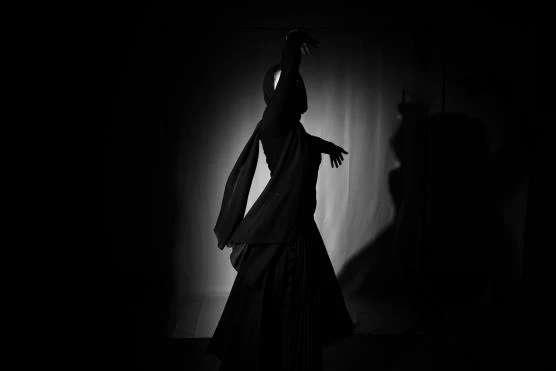
Mariam follows an unspoken pull toward a stranger, moving through suspicion, desire, and recognition as dance fractures the line between what is discovered and what remains unsaid.
Set in 1993, Mariam, 35, lives with careful composure. She manages her emotions through routine and restraint. One night, she joins a group of women as they move through exacting choreography. She follows their pace, then she slips out of their alignment suddenly. That night, she meets Layla, a young Lebanese interior designer. Their encounter unfolds through small actions and measured conversations. They manoeuvre around questions of time, permanence, and belonging. An earring on Layla looks familiar. Glances linger, and Mariam begins to observe more closely.
As the evening goes on, Mariam moves between the city and her home. Her husband’s presence feels steady and distant. Words chosen carefully. A gift is explained too precisely. An earring appears where it should not. Rather than confronting what begins to surface, Mariam gathers its fragments. Dance becomes the space where thought turns physical. Desire, suspicion, and recognition exist without resolution. She asks herself: Is love about certainty and possession, or about what one learns to endure without ever asking to be chosen?
As the evening goes on, Mariam moves between the city and her home. Her husband’s presence feels steady and distant. Words chosen carefully. A gift is explained too precisely. An earring appears where it should not. Rather than confronting what begins to surface, Mariam gathers its fragments. Dance becomes the space where thought turns physical. Desire, suspicion, and recognition exist without resolution. She asks herself: Is love about certainty and possession, or about what one learns to endure without ever asking to be chosen?