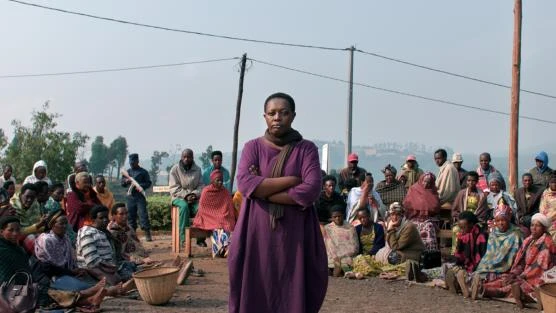
Rwanda, 2012. In the years following the Genocide against the Tutsi, community-led trials for justice and reconciliation continue across the country. Vénéranda, a survivor, leads dialogue between victims and the families of perpetrators, helping others rebuild their lives and look towards the future. But when she learns of her daughter’s unexpected pregnancy, she is forced to confront the limits of her own convictions, and to ask what a mother can pass on without passing on the pain.
Rwanda, 2012. In the years following the Genocide against the Tutsi, the Gacaca courts, community-led trials convened on the hillsides for justice and reconciliation, are drawing to a close. Vénéranda, a survivor, leads dialogue between victims and the families of perpetrators, helping others rebuild their lives and look towards the future. But when she learns of her daughter Tina’s unexpected pregnancy, she is forced to confront the limits of her own convictions. Around her, the past is never far away, written into the homes and the silences between neighbours.
Suzanne lives behind walls still scarred by fire and covered in messages left by survivors, while Madeleine watches her home destroyed, and mothers who have kept their silence for years must decide what to say, and what to keep from their children. Set in the misty hills of Kibeho and shaped by the women whose lives inspired it, many of whom appear on screen, Marie-Clémentine Dusabejambo’s debut feature took ten years to make. The first film by a Rwandan director in Cannes’ Official Selection, ‘Ben’Imana’ takes its title from a Kinyarwanda word Rwandans use to describe themselves as one people, sharing a single language and culture, and quietly asks whether that oneness can be rebuilt.
Suzanne lives behind walls still scarred by fire and covered in messages left by survivors, while Madeleine watches her home destroyed, and mothers who have kept their silence for years must decide what to say, and what to keep from their children. Set in the misty hills of Kibeho and shaped by the women whose lives inspired it, many of whom appear on screen, Marie-Clémentine Dusabejambo’s debut feature took ten years to make. The first film by a Rwandan director in Cannes’ Official Selection, ‘Ben’Imana’ takes its title from a Kinyarwanda word Rwandans use to describe themselves as one people, sharing a single language and culture, and quietly asks whether that oneness can be rebuilt.